Yes. On the public record there’s a solid conflict-of-interest case, and the clearest way to frame it is by the Foundation’s own rules, because A272 uses those same rules against Vini. Here’s the case, separating what Philipp has confirmed himself from what critics have shown but he hasn’t addressed.
The standard being applied
Article 4.6.2 says a person aware of an ongoing material conflict must resign unless it’s disclosed to the Board and Community and approved by a majority of disinterested Directors. Article 3.2.5.3 requires each member to vote on proposals without regard to any personal interest. A272 accused Vini of breaching exactly this: it attacks him over A249, a grant that paid his own company despite a recognized conflict. So the question is whether Philipp meets the standard he’s prosecuting Vini under. phoenixphoenix
1. Voting on payments to himself
Rarma documented Philipp voting yes on five milestone releases, 305,000 USDC in total, paid to the wallet Philipp lists as his own in topic 10, each passing with exactly three votes. That means his vote was necessary for each to pass. Rarma found no 4.6.2 disclosure or recusal record for these releases. Separately, MaxP counted at least seven proposals Philipp authored and voted for that paid his own address, totalling $20,450 and 3,500 LUNA, with no on-chain record of disclosure or disinterested-director approval. Phoenix Foundation: Appointment of an Emergency Supervisor +2
His defense is that milestone payments are tied to contractual deliverables, other directors do the verification, and the release is a formality. The weakness is obvious: if it’s a formality, he could have abstained, and with exactly three yes votes each time, his abstention would have changed the outcome. phoenix
2. ERIS, ampLUNA and the 30M LUNA
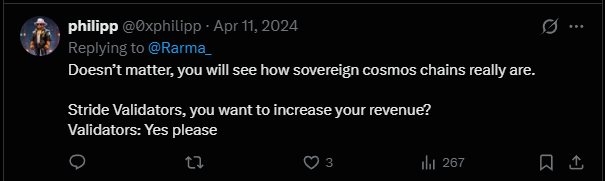
Proposal 4844 is verifiable on-chain: it requested 30M LUNA from the community pool to deploy liquidity into USDC–ampLUNA and LUNA–ampLUNA pools on Astroport. Rarma’s charge is that ERIS, which lists Philipp as CEO, takes 8% of ampLUNA staking rewards, the draft was put on-chain by ERIS’s owner address, and the draft didn’t mention his ERIS role or that fee. If accurate, a director steered 30M LUNA of community funds into a product his own company earns fees from, without disclosing it. That’s a textbook conflict. To be fair, Terra governance did approve 4844, so the issue is disclosure, not authorization. Philipp has not responded to this point in the thread. valopersphoenix
3. Retaining control he promised to hand over
This is the one he’s essentially admitted. His August 2024 TLA proposal said contract admin would go to PD Stewardship after one month and ownership after three. Ex_TFL cited transactions showing that, among other things, in October 2025 a Philipp-controlled wallet changed the registry’s fee recipient from the board to the Eris fee account. Philipp’s reply: ERIS still administers the TLA contracts because it develops and maintains them, and given his concerns about the board, ERIS hasn’t considered transferring that authority appropriate. So his company holds admin power over Foundation infrastructure, a fee flow was redirected to his company, and the handover was withheld based on his personal view of the board that’s supposed to oversee him. Ex_TFL repeatedly asked who approved departing from the published terms, under what authority and when, and that was never answered. Phoenix Foundation: Appointment of an Emergency Supervisor +3
4. Influence over the validators who will decide this vote
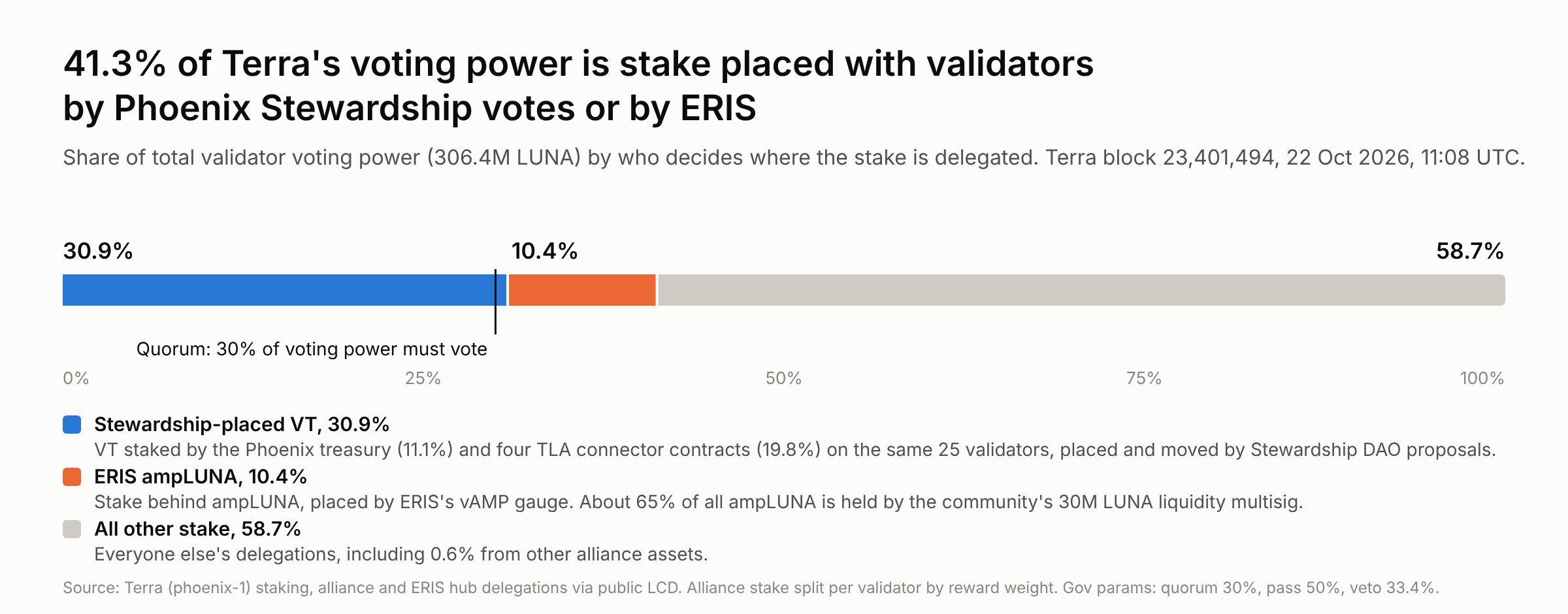
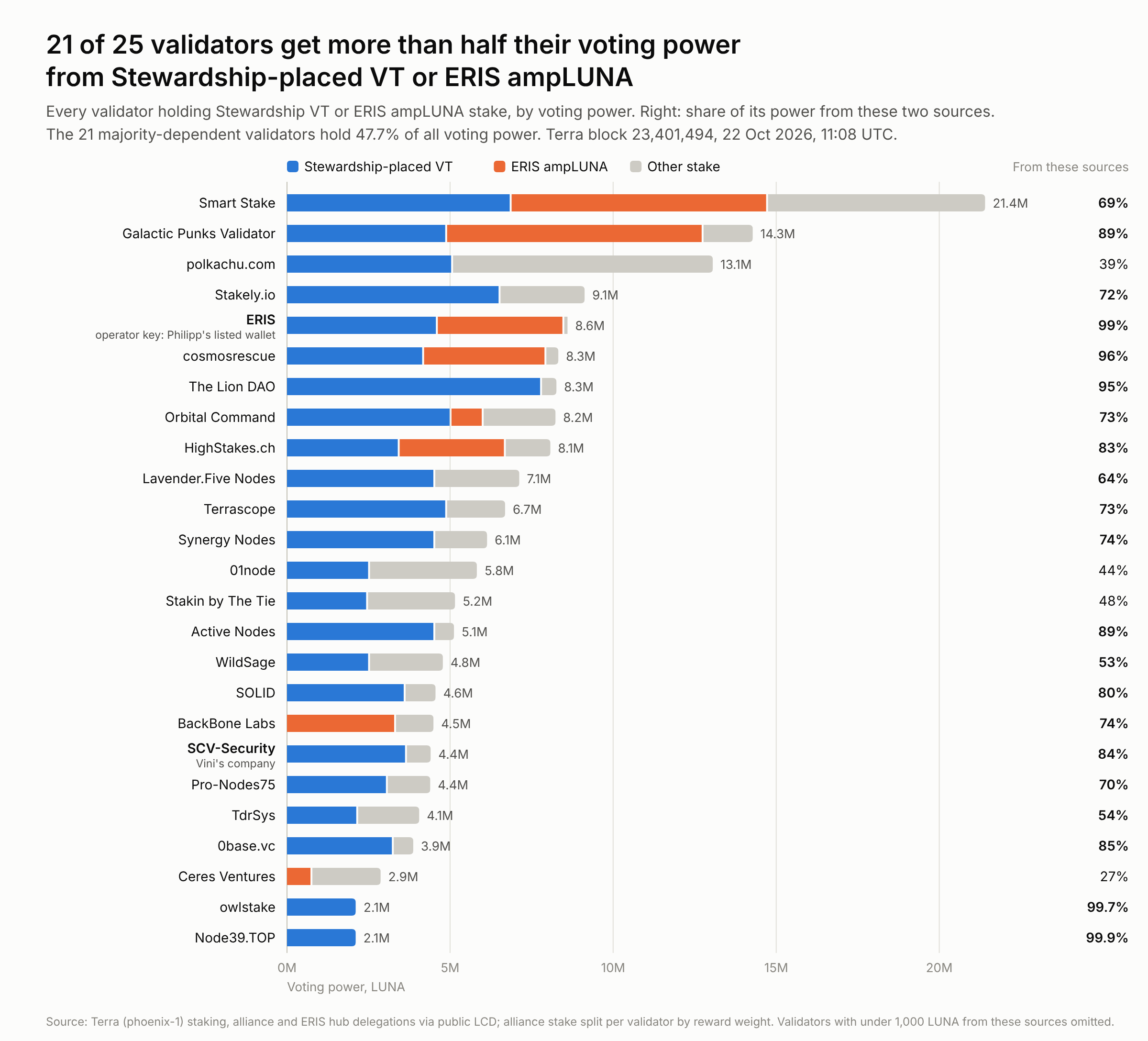
Rarma’s on-chain analysis shows 41.3% of Terra’s voting power is staked with validators either by Stewardship DAO votes or by ERIS, and Philipp proposed all 17 Stewardship proposals that placed or moved the Alliance stake. ERIS’s own validator, whose operator key is Philipp’s listed wallet, gets 99% of its power from these sources. Rarma explicitly isn’t alleging inducement, but the validators voting on Philipp’s proposal depend on stake that Philipp directs. Phoenix Foundation: Appointment of an Emergency Supervisor +2
5. A process shaped to his advantage
A272 paired removal with a threshold cut to 60%, and MB has voted identically to Philipp on all 119 proposals where both voted. The standing Supervisor is in office, but A272 wasn’t referred to them because Philipp says that wasn’t required and they can’t instruct removal. When asked to put all four directors under equal review, he said no, calling it an open-ended investigation that would derail the process. And Ex_TFL claims both proposed supervisors were contacted in advance by Philipp, which hasn’t been confirmed or denied. Phoenix Foundation: Appointment of an Emergency Supervisor +3
Bottom line
Yes, on its face Philipp has multiple material conflicts: payments to his own wallet that his vote was needed to pass, an undisclosed fee interest in a 30M LUNA community deployment, retained administrative control over Foundation infrastructure, and influence over the stake behind the validators deciding his proposal. Whether these are formal breaches depends on whether 4.6.2 disclosures and disinterested-director approvals exist somewhere, and no one has produced them. The strongest single argument is the double standard: the conflict rule he invoked to remove Vini, applied evenly, catches him at least as squarely.